Free AI App Builders: Full Comparison of Free Plans
September 11, 2026PUBLISHED INAI Development
 ali
 2026-09-11 15:50:00
 0
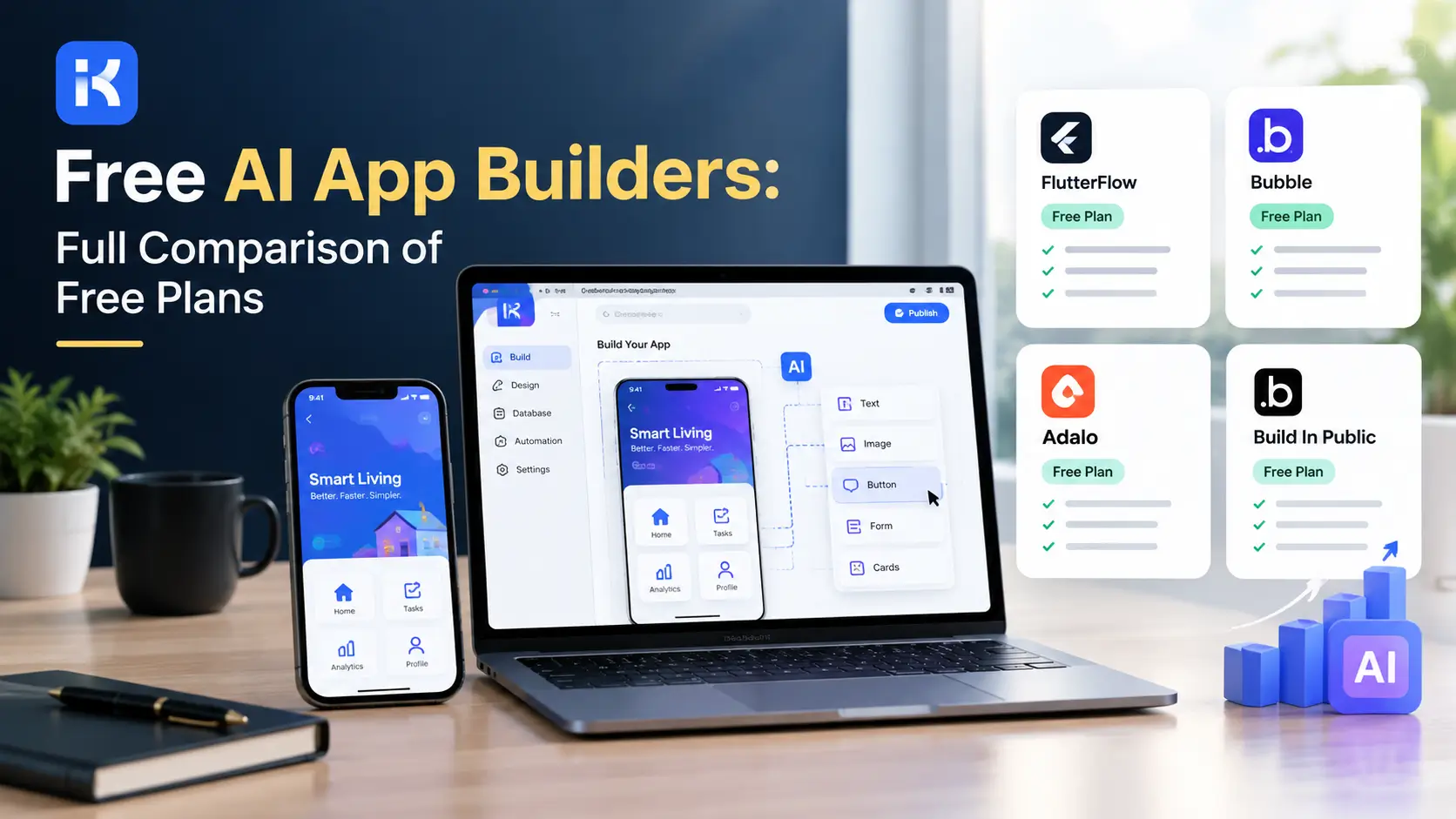
A free AI app builder is a great way to test whether a platform’s whole approach even fits what you’re trying to build, before spending a cent on it. It’s a far weaker place to actually run a real app long term, since every free tier here caps something that starts to matter the moment real users show up. Here’s what each free plan genuinely includes, and where it quietly runs out.
What Can You Actually Build on a Free AI App Builder?
Every major AI app builder’s free tier is designed around prototyping, not production use. You get enough to build a working demo and test the platform’s logic, but you’ll hit a limit well before you’d want to hand the app to real customers.
-
Bubble’s free plan lets you build and test an app carrying Bubble’s own branding and hosting, useful for learning the platform, not for launching anything real
-
Adalo’s free tier gives you a drag and drop builder, AI setup, and roughly two hundred database records, enough for a working prototype but nowhere near a live business tool
-
Glide’s free plan lets you build and preview an app from a Google Sheet, though publishing with a custom domain requires upgrading first
-
Softr and FlutterFlow both offer limited free tiers mainly meant for evaluation before you commit to a paid plan
Why Every Free Tier Has a Catch
Vendors aren’t hiding anything shady here. A genuinely unlimited free tier would cost them real money to host at scale, so every one of them draws the line somewhere:
-
A record or row cap that quietly forces an upgrade once your data grows
-
Branding you can’t remove until you pay
-
No custom domain support on the free level
-
Limited or no access to app store publishing
How Do the Free Plans Actually Compare?
Lining these tools up side by side makes the tradeoffs much easier to see at a glance.
-
Bubble: full builder access, but carries Bubble branding and hosting, and has meaningful capacity limits
-
Adalo: builder plus AI setup, roughly two hundred records included, no custom domain on the free tier
-
Glide: builder access with preview from Google Sheets, no custom domain until you upgrade
-
Softr: limited builder access, feature and record limits apply
-
FlutterFlow: limited builder access, app store publishing requires a paid plan
-
KodeFlex: no free plan offered at all
Why Doesn’t KodeFlex Offer a Free Plan?
This deserves a direct answer instead of a vague one buried somewhere in the fine print. KodeFlex doesn’t offer a free tier because it’s licensed by team size and app count, starting at a lifetime license or an annual plan, since it’s built for teams deploying real internal business apps, often with private or on premises hosting, not for solo prototyping on a free account.
-
Want to test an idea for free before spending anything? One of the platforms above is a genuinely better starting point
-
Already know exactly what you’re building, an internal approval workflow, a staging and production setup, an app your team needs to keep off a shared public cloud? That’s where KodeFlex is actually meant to be used
The Math Behind This Difference
A fifteen hundred dollar license covering fifty users and twenty apps often works out cheaper than what a team would pay across several per seat subscriptions on other platforms, once everyone who touches the app gets counted individually. That math simply doesn’t work the same way for someone building a single hobby app on a Saturday afternoon, which is exactly why the free tiers above exist for that use case, and KodeFlex isn’t trying to compete there at all.
How Should You Actually Choose Between These Free Tiers?
Match the free plan’s specific limit to what you’re actually testing, rather than chasing whichever platform has the loudest marketing page.
-
Testing whether AI generated logic makes sense for your process at all? Bubble or Adalo’s free tier is enough to answer that question honestly
-
Starting from an existing spreadsheet? Glide’s free preview will tell you fast whether that model fits your data
-
Building toward something customers will eventually depend on? Treat every free tier here as temporary, and plan the upgrade before you actually hit the wall, not after
None of these free tiers should be treated as a permanent home for anything customers genuinely depend on. Plan to upgrade once the record cap, branding, or publishing limit becomes a real blocker rather than a theoretical one.
What Should You Test First on a Free AI App Builder?
Before you pick one and start building for real, run a short test drive that actually tells you something useful about the platform.
A Simple First Test
-
Build the single most complex workflow your app will need, not the easiest screen, since the hard part is where platforms tend to show their real limits
-
Check how the record or row limit behaves once you cross it, does it just block you, or quietly degrade performance first
-
Try removing the platform’s branding to see exactly what that costs on a paid tier before you’re locked into the free one
-
Invite a second team member if the free tier allows it, since collaboration limits often surface faster than data limits do
What This Actually Tells You
A short test like this, done properly, usually takes an hour or two and saves weeks of rebuilding later. A small nonprofit testing three free tiers before choosing one for their volunteer scheduling tool is a far better use of a Saturday than discovering six months in that the record cap makes the whole thing unworkable right as usage finally picks up.
Straight Talk
Can I actually launch a real app on a free plan?
Not comfortably. Every free tier here caps something, records, branding, custom domains, or publishing, that a real launch genuinely needs.
Which free plan has the highest record or usage limit?
Adalo’s free tier includes roughly two hundred database records, which is workable for a small prototype but not for a growing user base over time.
Does Glide’s free plan support a custom domain?
No, a custom domain requires upgrading to a paid plan first.
Why doesn’t KodeFlex have a free plan?
It’s built and priced for teams deploying real internal business software, often with private deployment, rather than solo hobby prototyping, so the pricing model is a license rather than a typical free to paid funnel.
Is it worth testing more than one free plan before deciding?
Yes, and it usually takes less time than people assume. Testing two or three platforms for an hour each almost always reveals more than reading another comparison article, since you see how each one actually handles your specific workflow rather than a generic demo.
What should I do once I outgrow a free plan?
Compare the paid tier’s actual limits against what your app genuinely needs, users, records, custom domain, publishing, rather than just glancing at the sticker price. This guide to KodeFlex pricing shows how a license based model compares once your team is past the prototype stage.
If you’ve outgrown prototyping and need a real internal business app with a private deployment option, the full KodeFlex plans are worth a look, and a quick demo request will show you what it looks like built around your actual workflow.
Related Blogs
Best AI Website Builders in 2026 (Free and Paid Compared)