How to Build a Maintenance Management App (CMMS)
2 hours agoPUBLISHED INAi Development
 ali
ali 2026-10-06 13:08:00
 0
0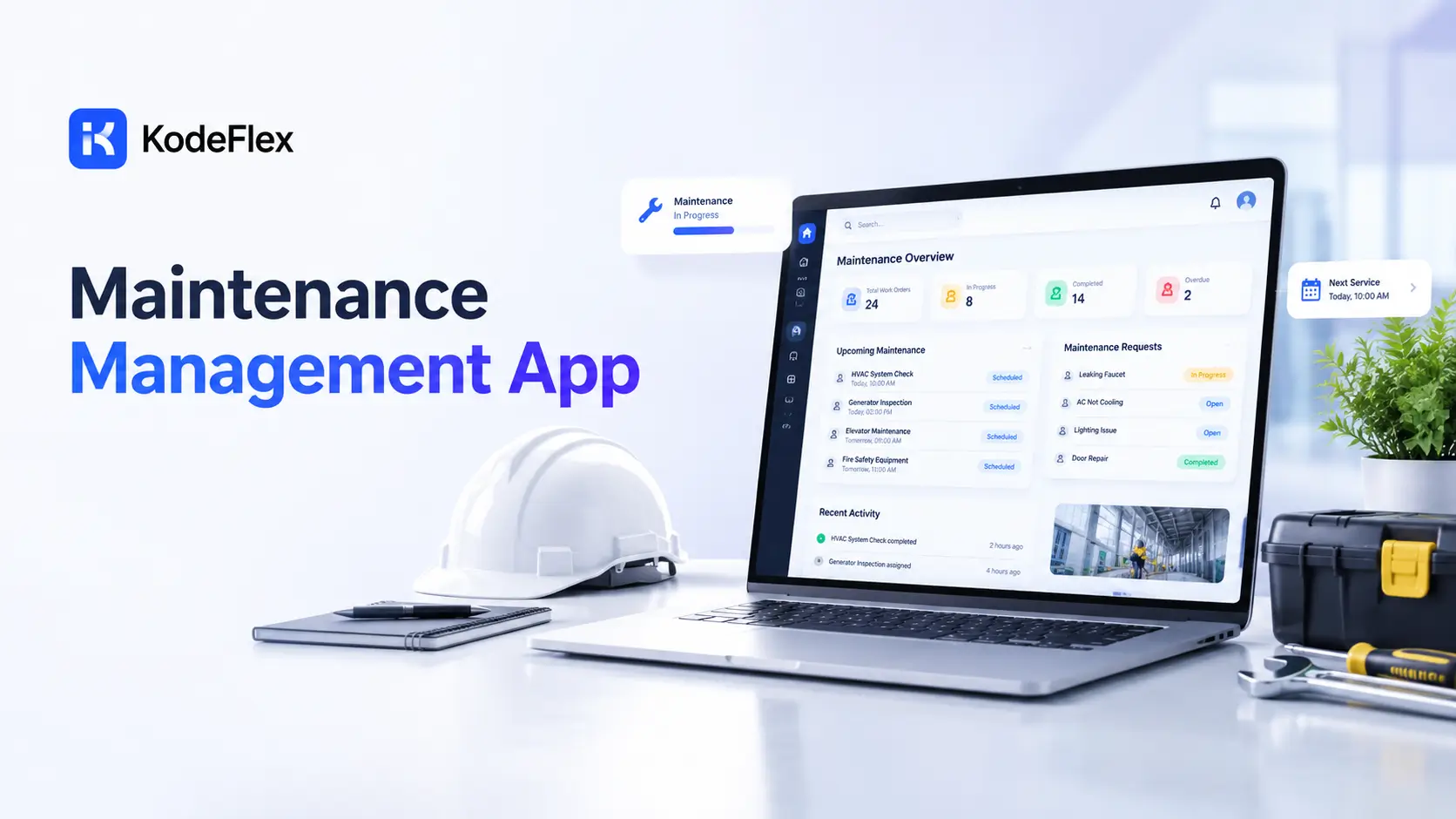
A pump fails on a Tuesday. Nobody knew its last service date. The request was a text message. The technician arrives without the right part. The fix takes a day longer than it should. Sound familiar?
A maintenance management app, often called a CMMS, fixes this. Requests are logged. Work orders have an owner. Every asset has a history. You don't need a developer to build one, and the visual workflow tools in a modern app builder make the process easier than you'd expect. Here's how, step by step.
What is a maintenance management app?
IBM describes a computerized maintenance management system (CMMS) as a tool that supports efficient scheduling, managing and tracking of maintenance tasks. In plain terms, it's the place where maintenance work is requested, assigned, done and recorded.
Most teams need four things from it:
-
Work orders. Who is fixing what, by when, and what the status is.
-
Preventive schedules. Recurring tasks so equipment gets serviced before it fails.
-
Asset history. Every repair and inspection, recorded against the asset.
-
Reports. Open orders, overdue tasks and repeat failures.
Preventive maintenance is the part that saves money. Regular tasks, done on time, aim to prevent downtime rather than react to it.
Step by step: build your maintenance management app
Step 1. List your assets and your process
Before you open any tool, write one page. What are you maintaining: machines, vehicles, buildings, equipment? Who reports problems? Who assigns work? Who closes it?
Honestly, twenty minutes here saves days later. Most projects stall because nobody agreed on who assigns the work. Settle that now.
Step 2. Describe the app in one prompt
KodeFlex is an AI development platform and app builder. You describe a business need in natural language, and it generates a runnable app with the frontend, backend and approval flows. So turn your page into a prompt:
-
"A maintenance app. Staff submit a repair request for an asset with a description, priority and photo. A supervisor reviews and assigns a technician. The technician updates the status and records what was done. Each asset keeps a history of all work."
It won't be perfect. Rough is the point. You refine it next.
Step 3. Set up the data model
A solid data model keeps everything else simple. Here's a starting point.
|
Record |
Key fields |
Notes |
|---|---|---|
|
Asset |
Asset ID, name, location, category, install date, status |
One record per machine, vehicle or item. |
|
Work order |
Asset, description, priority, requester, assigned technician, due date, status |
Links to an asset. |
|
Preventive schedule |
Asset, task, frequency, next due date, owner |
Creates work orders on a schedule. |
|
Maintenance log |
Asset, work order, date, work done, parts used, technician |
Builds the asset history. |
Step 4. Build the request form
Make reporting a problem easy. If it takes five minutes, people will send a text message instead. Keep required fields few: asset, what's wrong, priority. Add a photo field. Use dropdowns, not free text, wherever you can.
Step 5. Design the status path and approvals
Use visual workflow refinement to shape the flow. A typical path looks like this:
-
New. A request is submitted.
-
Reviewed. A supervisor checks it and sets the priority.
-
Assigned. A technician is named and a due date is set.
-
In progress. Work has started.
-
Done. The technician records the work. The requester can confirm.
Add a branch for costs. If a repair needs spare parts above a set amount, route it for approval before work starts. Add another branch for rejected or duplicate requests.
Step 6. Add preventive schedules
This is where the app earns its keep. For each asset, define recurring tasks and how often they're due. When a task falls due, the app creates a work order and assigns it to the right owner.
Start with a few high-value assets. Don't try to schedule everything on day one.
Step 7. Set permissions
-
Requesters see their own requests.
-
Technicians see work assigned to them and can update it.
-
Supervisors see everything for their team and can assign.
-
Managers see reports.
Step 8. Preview, test and release
KodeFlex offers live preview, debugging and one-click release and deployment. Use them. Run ten real requests through the app with the people who will use it. Fix what confuses them. Then release to one site or team before everyone else.
Reports your team will actually use
|
Report |
Question it answers |
|---|---|
|
Open work orders by priority |
What needs attention first? |
|
Overdue preventive tasks |
What are we falling behind on? |
|
Work orders by asset |
Which assets keep failing? |
|
Time to complete |
How long do repairs really take? |
|
Workload by technician |
Who is overloaded? |
How KodeFlex fits
KodeFlex builds internal business apps for enterprise collaboration. For maintenance, that means requests, approvals, assignments, schedules and logs. It also supports version control and a unified operations dashboard, and it has a private deployment option if you want to keep data in-house. The KodeFlex home page has the full overview.
Worth saying plainly: KodeFlex is a general app builder, not a dedicated CMMS product. It doesn't come with sensor or IoT connections, predictive analytics or a ready-made parts catalog. If you need those, look at a specialist system, or use an app like this for the workflow and request side.
On cost, the KodeFlex pricing page lists lifetime licenses from $1,499 for the Team edition (50 users, 20 apps) and annual licenses from $3,699. Plans change, so check the page.
Common mistakes to avoid
-
Tracking too much at the start. Begin with assets, work orders and a log. Add parts and costs later.
-
A request form nobody wants to fill in. If it feels like paperwork, people go back to text messages.
-
No owner for each status. A work order that belongs to nobody sits forever.
-
Scheduling every asset on day one. Start with the ones that cause the most pain when they fail.
-
Skipping the history log. Without it, you lose the best argument for replacing a tired machine.
-
Never reviewing reports. If nobody looks at overdue tasks, the schedule stops meaning anything.
A practical example: a small facilities team
Imagine a facilities team of eight looking after a few buildings. This is an illustration, not a case study.
-
Before. Requests come by phone, email and chat. Service dates live in someone's notebook.
-
Build. The team lists its main assets, builds the request form and sets the status path.
-
Schedules. Monthly checks on air conditioning units and quarterly checks on fire equipment.
-
Rollout. One building first, two weeks of testing, then the rest.
The result isn't magic. It's simply that every request has an owner and every asset has a history.
Checklist before you go live
-
Assets are listed with clear IDs and locations.
-
One request form works on a phone.
-
Each status has an owner.
-
Preventive tasks are set for your top assets.
-
Permissions are tested with real accounts.
-
Ten real requests have gone through the app.
Want to try this on your own equipment? You can request a KodeFlex demo or download KodeFlex and test it yourself.
Frequently asked questions
What is a maintenance management app?
It's an app where maintenance work is requested, assigned, done and recorded. It usually covers work orders, preventive schedules and a history for each asset. A full version is often called a CMMS.
Can I build a CMMS without code?
For the workflow side, yes. You can build requests, approvals, assignments, schedules and logs with an AI app builder and visual tools. Sensor connections and predictive analytics are usually beyond a general app builder.
What should a maintenance app track?
At minimum: assets, work orders, preventive schedules and a log of work done. Add parts used and costs once the basics run smoothly.
What is preventive maintenance?
It's servicing equipment on a regular schedule so problems are caught before a breakdown. The aim is to reduce downtime and avoid emergency repairs.
How long does it take to build one?
A rough first version can come together in an afternoon with an AI builder. Refining forms, approvals and permissions, and testing with real users, usually takes a few weeks.
Do I need a dedicated CMMS instead?
If you rely on sensor data, predictive maintenance or complex parts inventory, a dedicated system may suit you better. For request and work order workflows, a custom app can be enough.
How much does a platform like KodeFlex cost?
According to the KodeFlex pricing page, lifetime licenses start at $1,499 for the Team edition (50 users and 20 apps), and annual licenses start at $3,699. Check the page for current plans.
|
Ready to build your maintenance app? Tell us how your team handles repairs today and we will show you what it looks like as a working app. Request a KodeFlex demo to see it live, or explore the visual workflow tools first. |
Related Blogs

Best Power Apps Alternatives for Enterprise Teams