No Code vs Custom App Development: 2026 Guide
3 days agoPUBLISHED INAi Development
 ali
ali 2026-09-19 15:04:00
 0
0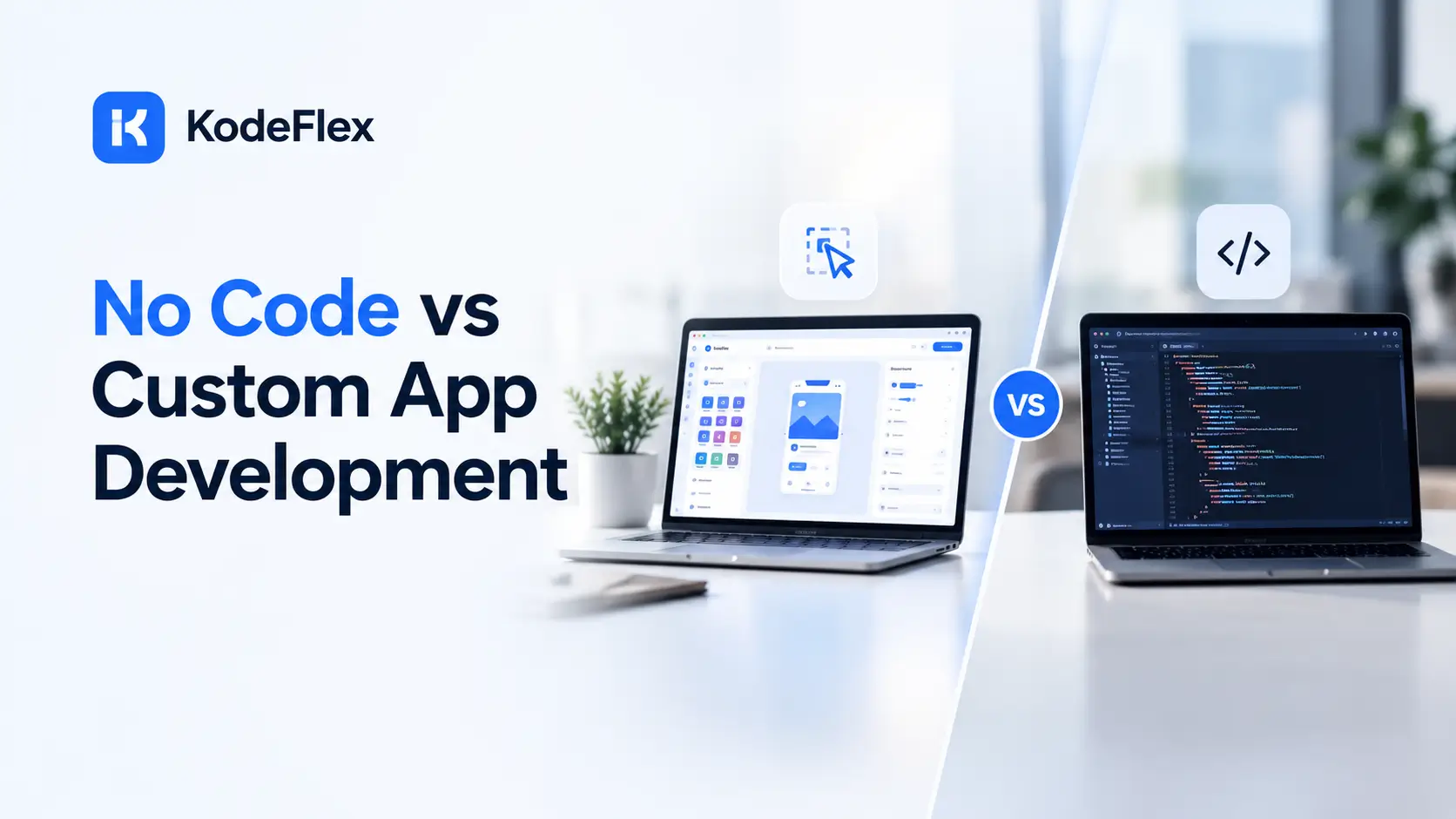
Deciding between a no code platform and hiring a custom web app development firm comes down to three honest questions: how much control do you actually need, how fast do you need it live, and how much are you genuinely willing to spend. Get clear answers to those three questions first, and the rest of the decision mostly falls into place.
What Does This Kind of Firm Actually Offer?
A development firm builds software from scratch using real code, giving you full ownership and control over every technical detail, at a real cost in both time and money.
What You Actually Get
-
Complete control over performance, design, and unusual functionality no template based tool supports
-
Code you own outright, with no platform dependency or vendor lock in
-
A team handling architecture decisions that matter for long term scale
-
Ongoing support, though usually at an additional hourly or retainer cost once the initial build wraps up
What It Actually Costs
A custom web app development firm typically charges $60,000 to $300,000 for a full project, with an average build timeline stretching toward eleven months according to industry data. A smaller, well scoped MVP through an agency still often runs $15,000 to $60,000.
What Does a No Code Platform Actually Offer Instead?
No code platforms trade some of that control and customization for dramatically lower cost and much faster time to launch.
What You Actually Get
-
A working app in days to a few weeks, rather than months
-
Predictable monthly pricing instead of a large upfront project cost
-
The ability to make changes yourself without going back to a development team for every small adjustment
-
Built in hosting, maintenance, and updates typically included in the subscription
What It Actually Costs
Most no code platforms run $0 to $500 monthly depending on usage, with a simple validation build costing as little as $1,000 to $5,000 in total effort and fees. AI native platforms with license based pricing, rather than monthly subscriptions, can push that even lower over time for a growing internal team.
How Do You Actually Decide Between the Two?
Match the decision to what the software actually needs to do, not to which option sounds more impressive in a pitch meeting.
Choose a Development Firm When
-
The software itself is your core competitive advantage, not just internal plumbing
-
You need functionality no existing platform genuinely supports
-
Long term scale and unusual performance requirements are already known, not hypothetical
Choose No Code When
-
You’re validating an idea before committing serious budget
-
The project is an internal tool or workflow app, not a market facing product
-
Speed to launch matters more than deep customization
-
Your team wants the ability to make ongoing changes without waiting on a developer’s availability
Is There a Middle Ground Worth Considering?
Increasingly, yes. AI native platforms sit between these two extremes, generating a working application from a description while still supporting real business logic, approval workflows, and private deployment.
This middle category matters specifically for internal business software, where a traditional no code tool might feel too limited but a full custom build is overkill for the actual need. If you’re weighing whether the investment in custom code is genuinely justified for your situation, this breakdown of is low-code worth it walks through that tradeoff directly.
What Hidden Costs Should You Watch for Either Way?
Neither path is as simple as the headline price suggests once real project scope enters the picture.
-
Custom development commonly adds fifteen to twenty five percent of the build cost annually in ongoing maintenance
-
No code platforms can accumulate hidden cost through workarounds, extra integration tools, and the eventual cost of migrating off the platform if you outgrow it
-
Both paths benefit from budgeting extra time for a round of revisions once real usage reveals what the initial scope missed
What Do Teams Usually Get Wrong About This Decision?
A handful of avoidable mistakes show up repeatedly in how businesses approach this choice.
Common Missteps Worth Avoiding
-
Assuming custom development is always “more professional” and picking it even when a no code platform would genuinely serve the actual need
-
Choosing no code purely on price without checking whether the platform actually supports a required feature before committing real time to building on it
-
Skipping references entirely when evaluating a development firm, then discovering mid project that the team’s actual experience didn’t match the pitch
-
Underestimating how much of a no code build still requires real thinking about data structure and workflow logic, even without writing code
A small healthcare scheduling company once chose custom development purely because it “felt more serious” for a compliance sensitive product, then discovered eighteen months later that a well configured no code platform with the right certifications would have shipped the same functionality in weeks for a fraction of the cost. Testing the actual platform against real compliance requirements before assuming custom code was necessary would have caught that early.
What Questions Should You Ask Before Committing Either Way?
A short list of honest questions before signing anything, whether that’s a development contract or a platform subscription.
-
Does this option actually support every feature the product genuinely needs, not just the ones it’s easy to demo
-
What happens to our data and workflows if this relationship or platform doesn’t work out
-
How predictable is the ongoing cost once the initial build or pilot phase ends
-
Who owns the resulting product, code, and data at the end of the day
Frequently Asked Questions
Is no code actually cheaper than hiring a custom web app development firm?
Usually, significantly, especially upfront. The gap narrows somewhat over a multi year timeline if a no code platform’s usage based pricing grows substantially with your traffic.
When does hiring a development firm actually make more sense?
When the software itself is your product’s competitive advantage, or when requirements are already known to exceed what any existing platform supports.
Can I start with no code and move to custom development later?
Yes, and it’s a genuinely common path. Migration takes real effort, but validating an idea cheaply before a larger investment is often the smarter sequence.
Do development firms ever use no code tools themselves?
Sometimes, for prototyping or internal tooling, though a firm delivering your core product will typically build it in code you own outright.
What’s the biggest risk of choosing the wrong option?
Overpaying for custom development on an idea that hadn’t been validated yet, or underbuilding on no code for a product that genuinely needed deep customization from the start.
If your project is an internal business tool rather than a market facing product needing deep customization, see how KodeFlex generates a working app from a plain language description. Check the pricing page for details, or send a demo request to see it built around your actual project.
Related Blogs

How to Build an AI App: Step by Step Guide