React Native App Dev vs No-Code: Which to Use?
yesterdayPUBLISHED INAi Development
 ali
ali 2026-09-30 12:55:00
 0
0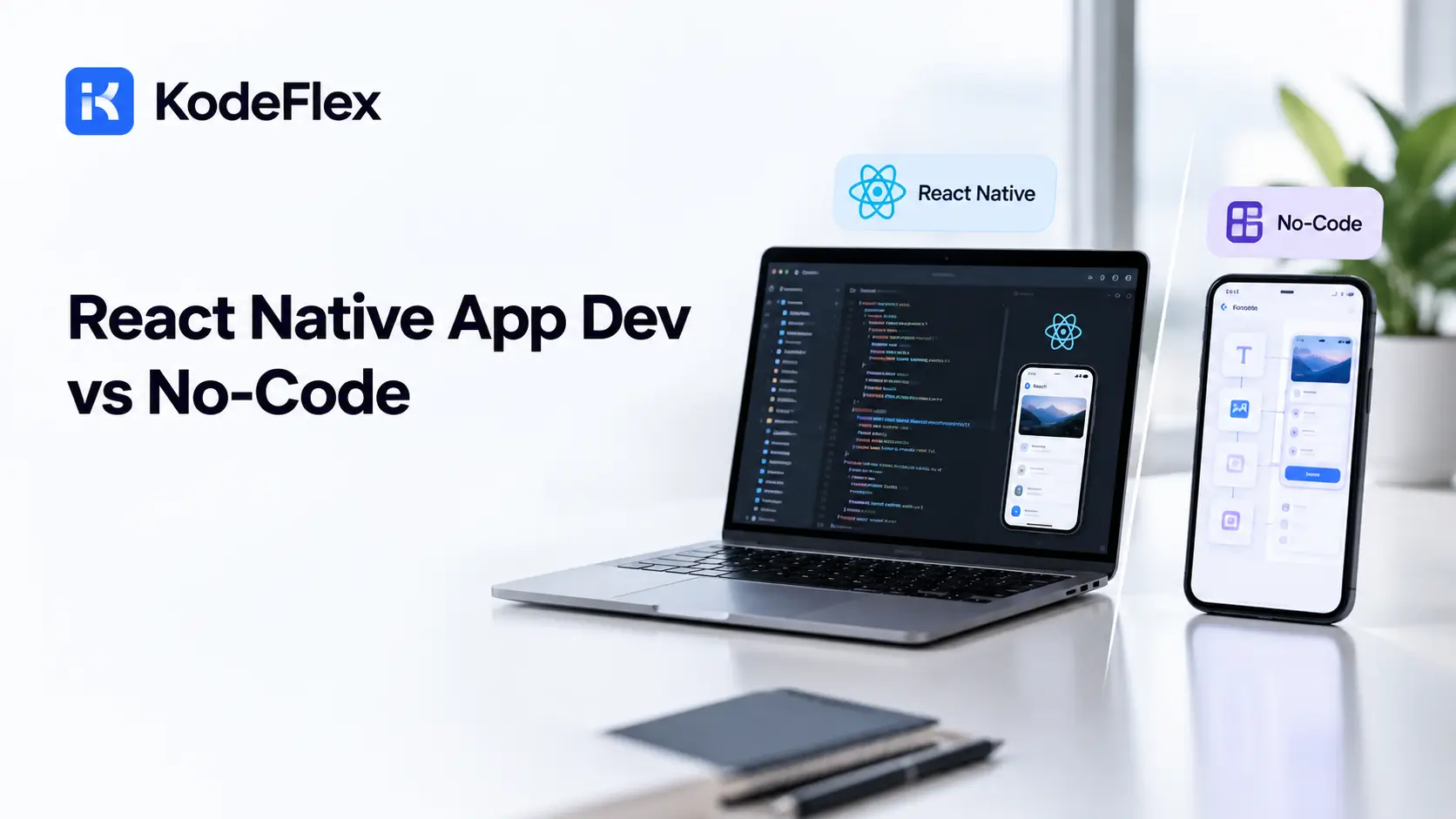
Hiring a React Native mobile app development company and using a no code app builder solve the same basic problem, a working mobile app, through two genuinely different paths. One gives you a custom codebase built by developers who own the technical decisions. The other gives you a working app fast, without a development team at all. Here’s how to actually decide which one fits your project.
What Does Hiring a React Native Development Company Actually Involve?
This kind of firm builds a custom app using React Native’s cross platform framework, with a real codebase you own outright once the project wraps up.
What You Actually Get
-
A dedicated team handling architecture, design, and technical decisions
-
A single codebase compiling to both iOS and Android, avoiding the cost of two separate native builds
-
Full code ownership, with no platform dependency once the project is delivered
-
The ability to build genuinely custom, complex functionality no template based tool anticipates
What It Actually Costs
This kind of firm typically charges $25,000 to $150,000 for a full project, depending on complexity, with mid range projects commonly landing between $40,000 and $80,000. Timelines usually run three to six months for a moderately complex app.
What Does a No Code Approach Actually Involve?
A no code or AI native app builder generates or lets you assemble a working app visually, without hiring a development team at all.
What You Actually Get
-
A working first draft often available within hours to days
-
Predictable, typically much lower cost than hiring a development company
-
The ability to make ongoing changes yourself without going back to a dev team for every adjustment
-
Built in hosting and maintenance, usually included in the platform’s pricing
What It Actually Costs
Most no code and AI native mobile builders run $25 to $100 monthly in subscription fees, or a flat license in the low thousands for platforms built around internal business apps rather than monthly billing. A working first version is often achievable for a small fraction of what a development company would quote for an equivalent project.
How Do You Actually Decide Between These Two Paths?
Match the decision to what the app genuinely needs, not to which option sounds more technically impressive in a meeting.
Choose a React Native Development Company When
-
The app needs genuinely custom, complex functionality no existing platform template supports
-
Long term scale and unique performance requirements are already known, not hypothetical
-
The app itself is a core product, not an internal tool, and deep customization is a real competitive advantage
Choose No Code When
-
You’re validating an idea before committing a large budget
-
The project is an internal tool, an MVP, or a fairly standard business app
-
Speed to a working version matters more than deep, unusual customization
-
Nobody on your team currently has budget for a development company’s typical project minimum
Is There a Middle Ground Worth Considering?
Increasingly, yes. Some no code and AI native platforms now generate real React Native or similar cross platform code from a written description, rather than producing a closed, proprietary output.
This middle path matters specifically for teams wanting to start fast without a development team, while keeping the option to bring in developers later if the project genuinely outgrows the generated starting point. Understanding whether that investment in deeper customization is actually worth it for your situation is covered in more depth in this breakdown of is low-code worth it.
What Are the Real Risks of Each Path?
Being honest about the downsides of both options avoids a decision based only on the upside.
-
A React Native development company project can run over budget or timeline if requirements shift mid project, a common risk in custom development generally
-
A no code build can hit a genuine feature ceiling once the app’s needs exceed what the platform’s templates anticipated
-
Switching from no code to custom development later is possible but requires real rebuilding effort
-
Hiring the wrong development company, without proper vetting, risks a poorly built codebase that’s expensive to fix later
What Does a Real Comparison Look Like Side by Side?
Walking through one concrete scenario makes the tradeoff easier to picture than an abstract list of pros and cons.
A regional fitness chain needed a booking app for members across twelve locations. Getting quotes from a React Native mobile app development company, estimates ranged from $45,000 to $70,000 with a three to four month timeline. Testing a no code approach instead, describing the booking workflow, class schedules, and membership tiers, produced a working first draft within two days, refined over the following week to handle their specific multi location logic, at a total cost under $2,000 including the first year of platform fees. The chain launched with the no code version, validated real usage across all twelve locations, and kept the option to revisit custom development later if the app’s needs eventually outgrew the platform.
What Should You Ask Before Committing to Either Path?
A short set of questions before signing a contract or committing to a platform clarifies the decision considerably.
-
Does the project have functionality no existing no code platform template supports well
-
Is the budget genuinely available for a multi month custom development timeline
-
How confident are you in the requirements, since custom development handles changing requirements less gracefully than a no code build you can adjust yourself
-
Would validating demand with a faster, cheaper version before committing larger budget reduce your risk
Frequently Asked Questions
Is a React Native mobile app development company always better for quality?
Not necessarily. Quality depends more on the specific team’s experience than the general category. A skilled no code build can outperform a poorly executed custom project.
Can I start with no code and hire a development company later if needed?
Yes, and it’s a genuinely common path. Validating demand with a no code build first, then investing in custom development once growth justifies it, is a reasonable sequence.
How long does hiring a React Native development company typically take?
Often three to six months for a moderately complex app, compared to hours or days for an initial no code version, though the no code version may need more ongoing refinement.
Is no code good enough for a real, customer facing mobile app?
For many straightforward products, yes. Highly custom, performance demanding, or deeply unique apps are where hiring developers still makes more sense.
What’s the biggest mistake teams make choosing between these two paths?
Defaulting to custom development out of habit or perceived seriousness, even when the project is genuinely standard enough that a no code build would serve the need for a fraction of the cost and time.
If your project is an internal business tool rather than a highly custom consumer product, see how KodeFlex generates a working app from a plain language description, or request a demo to see it built around your actual process.
Related Blogs

30+ AI App Ideas You Can Build Without Code