Best AI App Builder for Startups in 2026
September 3, 2026PUBLISHED INAI Development
 ali
 2026-09-03 16:14:00
 0
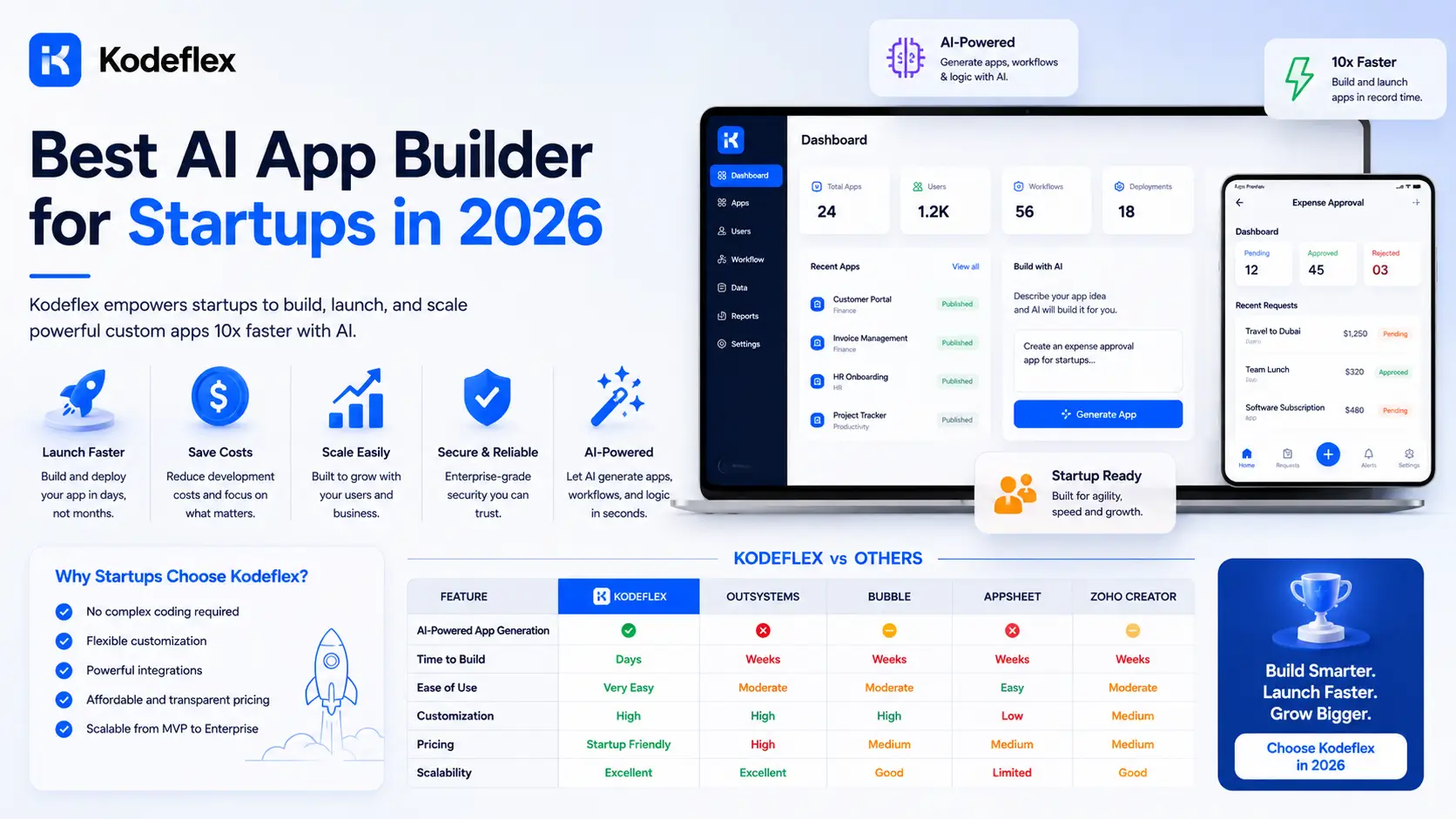
A ten-person startup doesn't have a spare engineer to build an internal onboarding tracker or a customer request form. Every engineering hour is already spoken for by the actual product. That's the specific gap an AI app builder fills well at this stage, not because startups need less capable software, but because they genuinely can't justify pulling a scarce engineer off product work to build something internal.
The Real Constraint Isn't Budget, It's Attention
Most early-stage teams could technically afford a contractor for a small internal tool. What they can't afford is the coordination overhead, writing a spec, briefing someone, reviewing the output, for something that isn't the core product. An AI app builder collapses that overhead, the person who needs the tool describes it and gets a working draft the same day, without pulling anyone else into the loop.
Where This Shows Up Concretely
Early customer feedback trackers, before there's budget for a dedicated tool. Internal approval flows for expenses or purchases, once a founder can't personally approve every request anymore. Simple applicant tracking for the first handful of hires, before volume justifies a full ATS. Investor update logs, customer onboarding checklists, whatever specific process a five-to-thirty person company actually needs tracked, not a generic template, but the exact shape of how that team works right now.
Why Generic Templates Often Don't Fit Yet
Established SaaS products in adjacent categories are usually built for a mature version of the process a startup hasn't standardized yet. A startup's hiring pipeline might have three stages this quarter and five next quarter, as the team figures out what actually works. KodeFlex fits this better than a rigid, feature-complete platform because the underlying workflow logic is meant to be adjusted as the process itself is still being figured out, not locked into a configuration decided on day one.
What Changes as the Startup Grows
The apps that make sense at 10 people don't always stay right at 100. A lightweight approval flow built for a founder personally reviewing every request needs real role-based routing once there's a management layer in between. This isn't a flaw in the initial approach, it's expected, and revisiting an app's logic as the company's actual structure changes is normal maintenance, not a sign the original tool was wrong.
When a Startup Should Still Hire an Engineer for This
If the internal tool needs to integrate deeply with the core product's codebase, touch sensitive production data directly, or handle genuinely novel technical logic outside typical business-workflow patterns, that's still a job for an engineer, ideally one who understands the product's architecture. An AI app builder is for the internal tools running alongside the product, not embedded inside it.
Straight Talk
Is this a replacement for hiring engineers eventually?
No, it's specifically useful for the internal tooling gap before a team has (or should spend) engineering capacity on that category of work.
Does a two-person startup really need this, or is a spreadsheet fine?
A spreadsheet is often genuinely fine at that stage. This tends to matter more once a process involves more than one or two people coordinating.
Can non-technical founders actually use this without help?
Yes, that's the specific design goal, describing a process in plain language rather than needing someone with development experience to build it.
What happens if the startup's process changes fast?
The generated app is editable, not fixed, so adjusting fields, steps, or routing as the process evolves is expected, not a rebuild.
Is this secure enough for an early-stage company handling real customer data?
For internal operational data, generally yes. For anything highly sensitive, evaluate data handling and deployment options specifically before relying on any tool.
Want to see how fast a real internal tool comes together?
Visit KodeFlex or request a demo and describe what your team actually needs.
Related Blogs
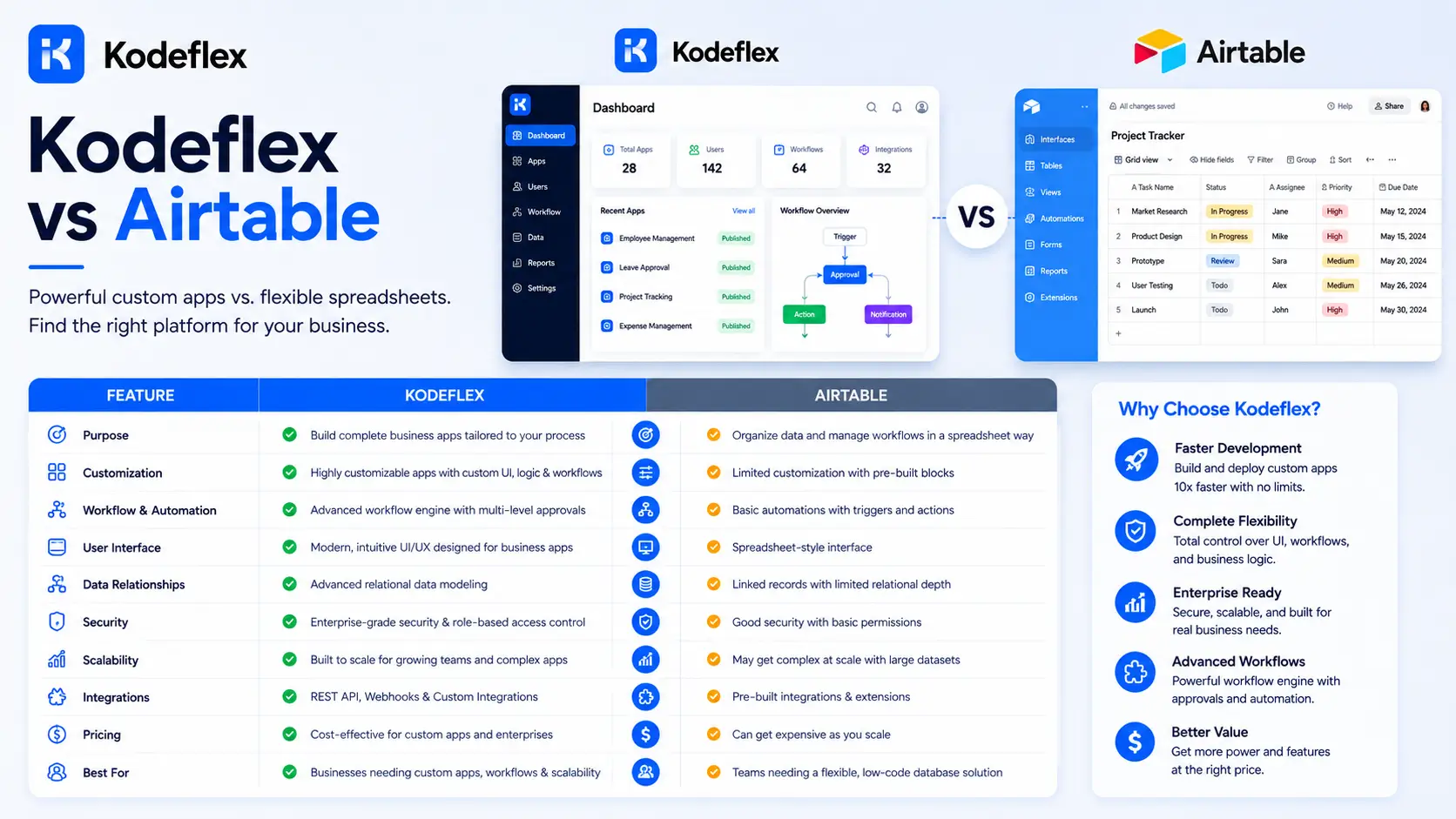
KodeFlex vs Airtable: Comparing an App Builder to a Database