
Building AI Applications: A Practical Framework
yesterdayPUBLISHED INAi Development
 ali
ali 2026-09-21 14:22:00
 0
0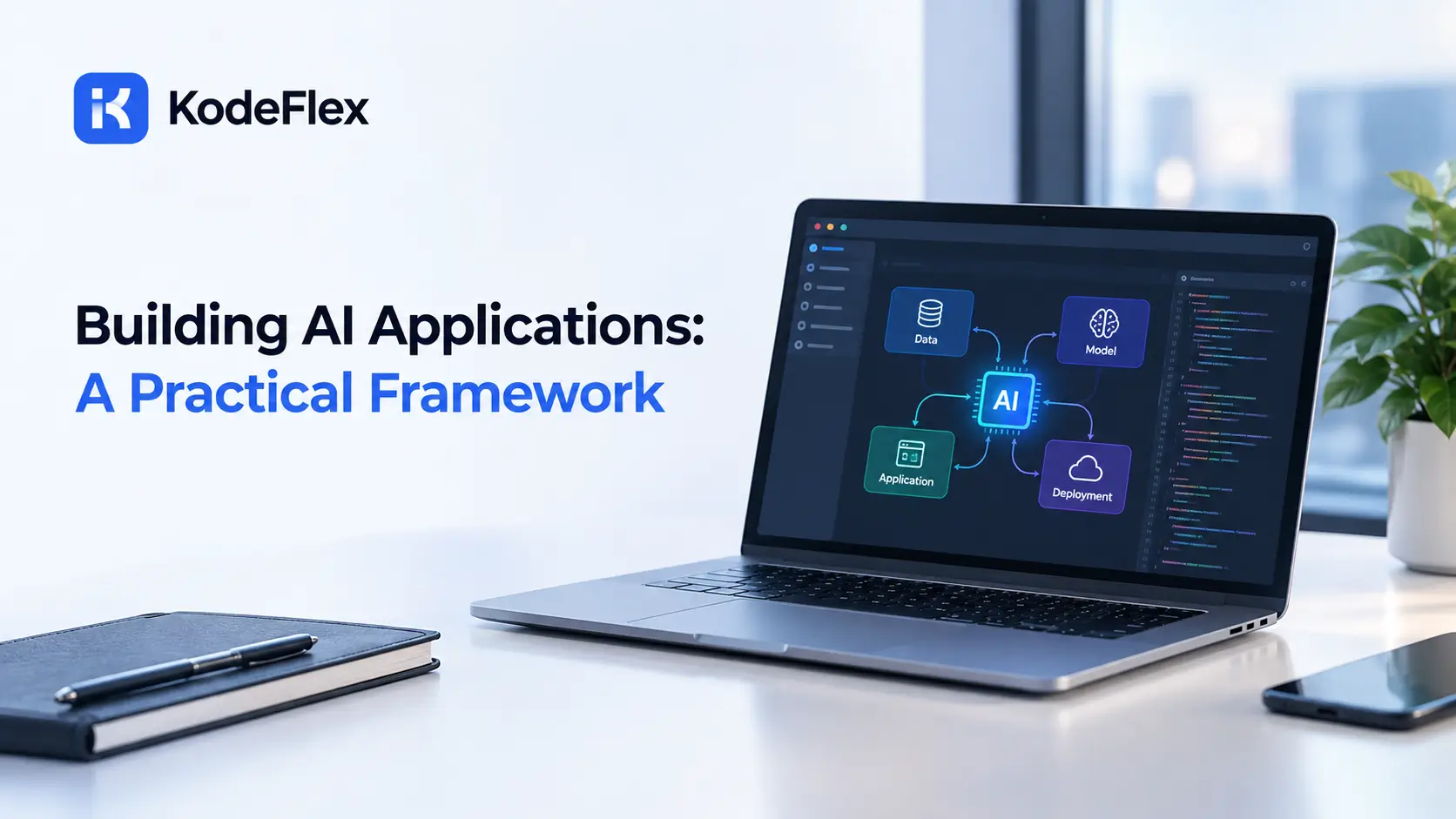
Building AI applications successfully has less to do with which tool you pick and more to do with the order you make decisions in. Teams that start with the use case, then the data, then the tool, consistently end up with something that actually works. Teams that start by picking a trendy platform and working backward tend to end up with something impressive in a demo and useless in production. Here’s a practical framework for getting the order right.
Step One: Define the Actual Use Case Before Anything Else
The most common mistake in building AI applications is starting with a tool instead of a problem. Reverse that order and everything downstream gets easier.
Questions Worth Answering First
-
What specific, recurring task is eating real time right now, not a hypothetical future need
-
Who does this task today, and what do they actually do step by step
-
What does success look like in a way you could actually measure, hours saved, errors reduced, faster response times
-
Does this task involve judgment, in which case AI genuinely helps, or is it purely repetitive, in which case plain automation is the better fit
Step Two: Understand What Data the Application Actually Needs
An AI application is only as good as the data feeding it, and this step gets skipped more often than it should.
What to Map Out
-
Where does the relevant data currently live, spreadsheets, existing software, someone’s inbox
-
Is the data structured, like a database, or unstructured, like free text in emails or documents
-
How clean is the data actually, and what needs fixing before anything useful can be built on top of it
-
Who needs access to this data, and are there any privacy or compliance constraints on how it can be used
Step Three: Choose the Right Category of Tool for the Job
Only after the first two steps should tool selection actually happen, and the right category depends entirely on what you learned along the way.
Matching the Tool to the Need
-
Purely repetitive, rule based tasks fit plain automation tools, not AI at all
-
Tasks needing judgment on unstructured input, reading messages, summarizing documents, fit an AI layer added to a workflow
-
Building an entirely new internal application with forms, a database, and approval logic fits an AI native app builder that generates a working starting point from a description
-
Complex, highly custom technical requirements may still justify custom development, even after considering the faster options
Step Four: Build a Narrow Pilot Before Expanding
Building AI applications at full scope on the first attempt is a common way to waste months on the wrong version of the idea.
-
Pick the single narrowest version of the use case that still delivers real value
-
Get it in front of real users within days or weeks, not months
-
Measure the specific outcome you defined in step one, not just whether people liked using it
-
Expand scope only once the narrow version is genuinely working reliably in practice
Step Five: Plan for Ongoing Ownership, Not Just the Initial Build
An AI application that works well on launch day can drift out of usefulness within months if nobody owns keeping it accurate and relevant.
-
Assign a clear owner responsible for the application after launch, not just during the build
-
Review actual usage periodically to catch drift between what the app does and what the process actually needs
-
Collect feedback actively rather than waiting for complaints to surface problems
-
Revisit the underlying use case periodically, since the process itself often evolves faster than the application built around it
How Does This Framework Actually Apply to an Internal Business Tool?
A concrete example makes the whole sequence easier to picture. A finance team wants to speed up expense report review.
-
The use case: reviewing expense reports currently takes a manager several hours weekly, and errors slip through inconsistently
-
The data: expense data lives in a spreadsheet today, reasonably structured but manually entered and prone to typos
-
The tool: an AI native app builder generating a working expense review app, with automation handling the routing and an AI step flagging unusual amounts for review
-
The pilot: launched to one department first, measuring hours saved and errors caught before rolling out company wide
-
Ongoing ownership: the finance team lead reviews flagged patterns monthly and adjusts the rules as spending patterns shift
For a closer look at how the generation step in that third stage actually works, this guide on What is an AI App Builder covers the mechanics in more depth.
What Mistakes Derail Projects That Follow This Framework Loosely?
A handful of patterns show up repeatedly even among teams that generally understand the right sequence.
Common Missteps Worth Avoiding
-
Rushing step one, writing a vague use case statement instead of talking to the actual people doing the task today
-
Assuming data is cleaner than it actually is, then discovering real gaps only after the tool is already selected and work has started
-
Picking a tool based on what a competitor uses rather than what the specific use case and data actually require
-
Skipping the narrow pilot entirely and building the full scope version first, which makes early mistakes far more expensive to fix
A regional retailer once skipped straight from a vague use case statement to selecting a tool, only to discover three weeks into the build that the sales data they needed lived across four disconnected spreadsheets with inconsistent formatting. Going back to properly map the data first would have surfaced that cleanup work before any building time was spent.
How Do You Know a Pilot Is Actually Ready to Expand?
A few concrete signals separate a pilot that’s genuinely ready to scale from one that just seems promising.
-
The measured outcome from step one has actually improved, not just anecdotal enthusiasm from early users
-
The application has run long enough to encounter real edge cases, not just the clean scenarios used during testing
-
The team responsible for ongoing ownership is identified and has capacity to actually take it on
-
Expanding scope doesn’t require fundamentally rebuilding what already works, just extending it
Frequently Asked Questions
Is this framework only useful for large companies?
No, small teams benefit just as much, arguably more, since a clear framework prevents wasted effort when resources are already limited.
What’s the biggest mistake teams make when building AI applications?
Picking a tool before clearly defining the use case and understanding the underlying data. That order, reversed, causes most failed projects.
How do I know if a task actually needs AI or just plain automation?
If the task requires judgment on ambiguous or unstructured input, AI helps. If it follows the same fixed steps every time, automation alone is usually simpler and more reliable.
How long should a pilot run before expanding it?
Long enough to gather a meaningful sample of real usage, often a few weeks, but not so long that momentum and stakeholder interest fade before you can show results.
Do I need a dedicated technical team to follow this framework?
Not necessarily. Many of these steps are about clear thinking and planning rather than technical execution, and several tools now handle much of the technical build automatically.
Ready to move from framework to an actual working application?
See how KodeFlex generates a starting point from a plain language description, or request a demo to see it built around your specific use case.
Related Blogs

No Code Development Agencies: How They Work