Citizen Developer: What the Role Means for Enterprises
August 17, 2026PUBLISHED INAI Development
 ali
 2026-08-17 19:08:00
 0

A citizen developer is someone who builds business applications without being a professional software developer, usually someone in operations, finance, HR, or another business function who understands a process well enough to automate or digitize it themselves, using low-code, no-code, or AI-powered tools rather than writing traditional code. The role exists because IT departments have always had more requests than capacity, and a lot of internal tooling needs don't actually require a trained engineer to build well.
Why the Role Emerged in the First Place
IT backlogs are a near-universal problem. Small, specific requests, an approval form, a tracking spreadsheet turned into something more structured, a request routing tool, compete for attention against larger strategic projects and consistently lose. Citizen development emerged as a pressure release valve: give the person who actually understands the process the tools to build it themselves, rather than making them wait months for a developer to become available for something that, from an engineering standpoint, isn't particularly complex.
What Citizen Developers Typically Build
The pattern tends to repeat across industries: approval workflows, internal request forms, simple tracking and reporting tools, department-specific checklists and processes. These are almost always tools that solve a real, specific business problem the citizen developer understands intimately, but that don't require deep technical architecture, complex integrations with core systems, or heavy security engineering. That boundary matters, and getting it wrong in either direction causes problems.
The Real Risk: Shadow IT Without Governance
Citizen development without any IT involvement tends to produce shadow IT, tools built and used outside any official oversight, with no consistent security review, no backup or continuity plan if the person who built it leaves, and no visibility for IT into what data these tools are actually touching. This isn't a reason to avoid citizen development, it's a reason to give it structure rather than letting it happen entirely off the books.
What Good Governance Actually Looks Like
The organizations that get this right usually do a few things consistently: they define clear boundaries for what citizen developers can build without IT sign-off versus what needs review, they require sensitive data handling to go through IT-approved patterns regardless of who's building the tool, they maintain visibility into what's been built and who owns it, and they provide a clear escalation path when a citizen-built tool starts approaching the complexity or scale where it genuinely needs professional engineering involvement.
Where a Structured Platform Fits In
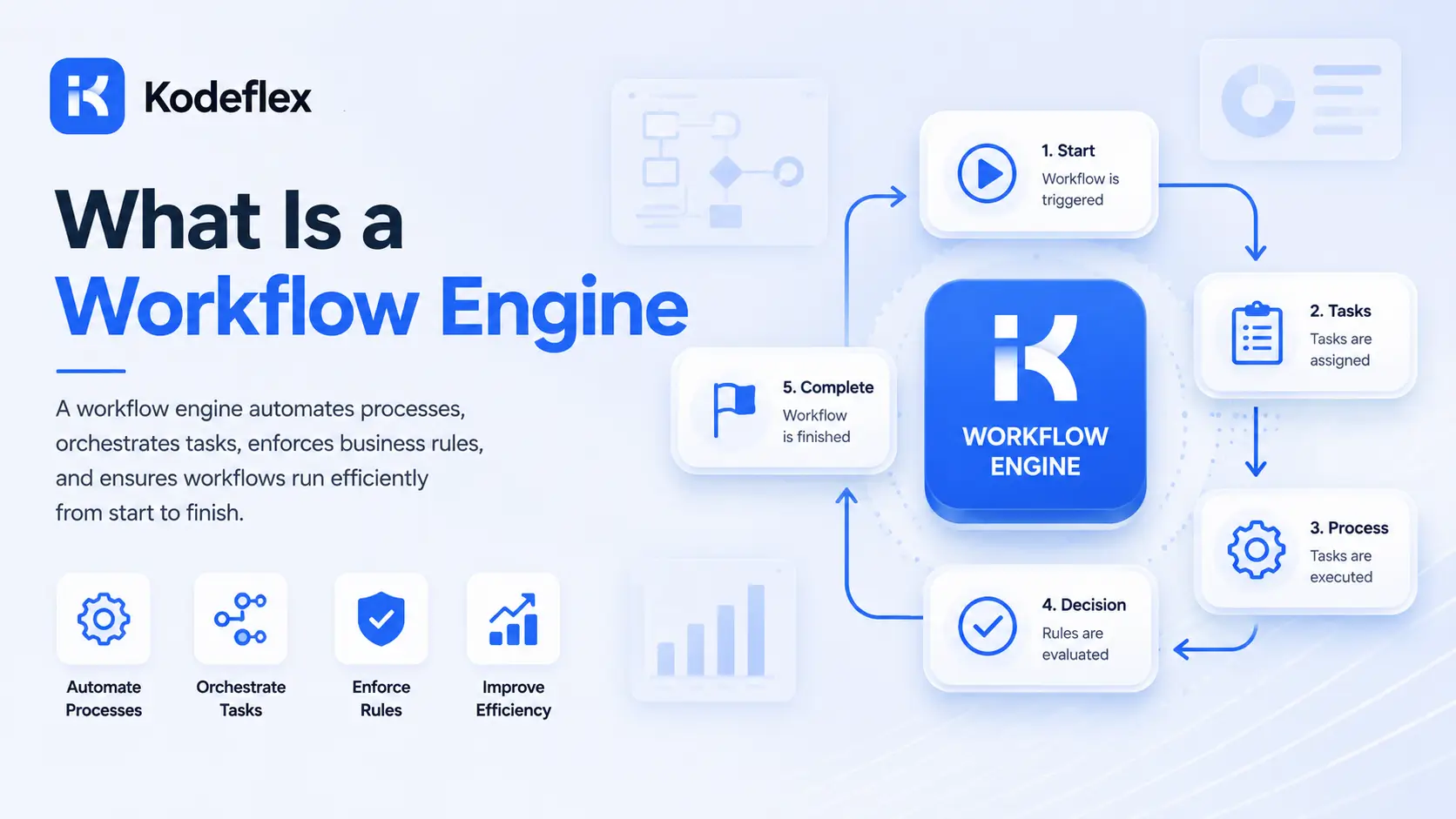
A lot of the shadow IT risk comes from citizen developers using disconnected, ungoverned tools, a random spreadsheet macro, an unmanaged automation script. A platform like KodeFlex gives citizen developers a structured environment instead: apps are generated from plain-language descriptions, but they run on a consistent workflow engine with permissions and instance management built in, so IT retains visibility and control even when a business user is the one actually building the app. The citizen developer gets speed and independence; IT gets governance without having to personally review every small request.
Frequently Asked Questions
Do citizen developers need any technical background?
No, that's the point of the role. They typically come from business functions and use low-code, no-code, or AI-powered tools rather than writing traditional code.
Is citizen development a security risk?
It can be, if it happens without any governance or IT visibility. With clear boundaries and a structured platform, the risk is significantly reduced.
What shouldn't citizen developers build?
Anything requiring deep integration with core systems, heavy security engineering, or handling highly sensitive data without IT-approved patterns should involve professional engineering oversight.
How does IT maintain oversight of citizen-built apps?
Through clear governance policies, visibility into what's been built, and platforms that build in permissions and management controls rather than relying on entirely disconnected tools.
Is citizen development replacing professional developers?
No, it's addressing a category of smaller, business-specific requests that don't require deep engineering, freeing professional developers to focus on more complex work.
Want to see how citizen developers can build with real governance built in?
Request a demo and see the structure behind the speed.
Related Blogs
AI Vibe Coding vs Production-Grade Apps: What's the Risk?