Application Management
1. KodeFlex Introduction
1.1 About KodeFlex
2. Installing KodeFlex
2.1 Windows One-Click Installer
2.2 Linux One-Click Installer
2.3 Installing ZAI Service
2.4 Installing from the Source Package (All Operating Systems)
3. Upgrading KodeFlex
4. Platform
4.1. Application Management
4.1.1 Create an Application
4.1.2 Maintenance Application
4.2. Module Design
4.2.1 About the Module
4.2.2 Main Table Design
4.2.3 Sub-table Design
4.2.4 Action Design
4.2.5 Label Design
4.2.6 More Settings
4.2.7 Release Deactivated Modules
4.3. AI Features
4.3.1 Intelligent Conversation
4.3.2 Agent
4.3.3 Skill
4.3.4 Model List
4.4. Application Instance Management
4.4.1 Maintenance Instance
4.4.2 Navigation Menu
4.4.3 Data Source
4.4.4 Validation Rules
4.4.5 Approval Process
4.5. User
4.5.1 Maintain Users
4.5.2 Maintenance Department
4.6. Permissions
4.6.1 Maintenance Permissions
4.7. System
4.7.1 Company
4.7.2 Backup
4.7.3 Authorization Information
4.7.4 Safety
4.7.5 Timing
4.7.6 Time zone
4.7.7 LDAP
5. Business Applications
5.1 Access Applications
5.2. Backend
5.2.1 Personnel Management
5.2.2 Access Management

Maintenance Application

2026-06-23 15:01:57
liujinyuan
285
Last edited by haoyonghong on 2026-07-30 15:51:36
Share links

1. Publish an Application Version

On the "Application Management" list page, click the "Publish" button for the corresponding application to publish a new application version.

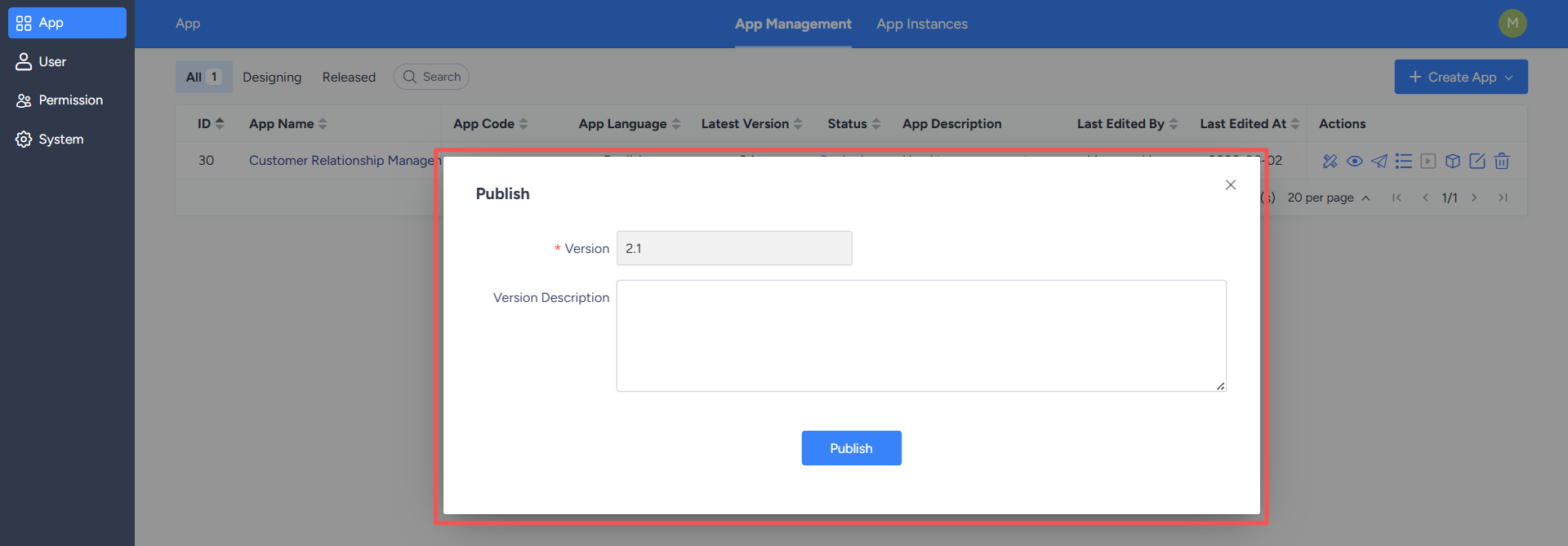
After the version is published, the system will generate a corresponding version record. Designers can click the "Version List" button to view the published versions of the application.


2. Deploy an Application Instance

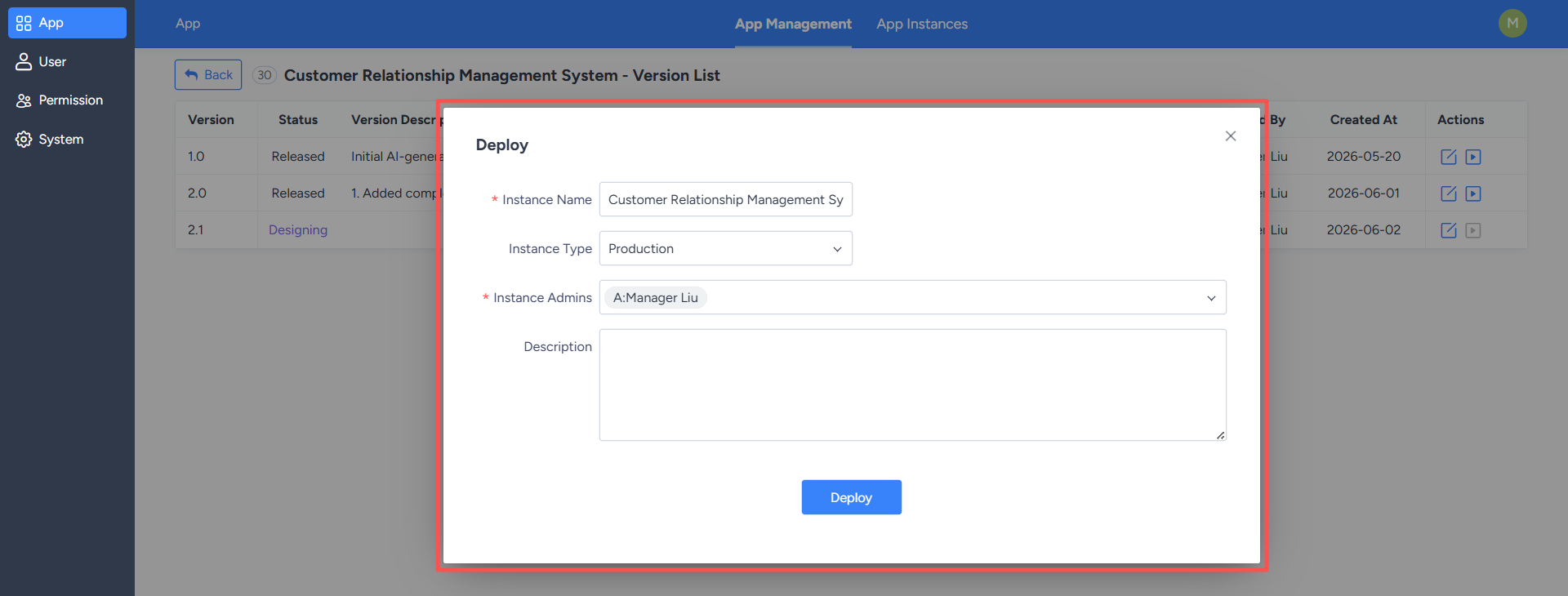
On the version list page, click the "Deploy" button for the corresponding version to bring up the deployment pop-up window.
During deployment, you need to fill in the relevant deployment information and select the deployment instance type. You can also add an administrator to the instance. The system supports the following deployments:
  • Test Instance: Used for testing and verifying application functionality.
  • Production Instance: Used for production business environments.

After confirming that the information is correct, click the "Deploy" button to begin deployment. After deployment is complete, users can access the corresponding instance to use the published application.

Write a Comment
Comment will be posted after it is reviewed.